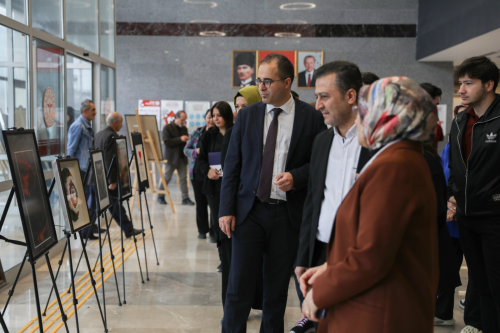
The ‘3rd Information Meeting’ of the Halosheep project was held at MAKÜ
Yapılış Tarihi | 14 February 2025, Friday

The work of the International Halosheep Project, which will calculate the carbon footprint in sheep-goat breeding for the first time in Turkey, continues. After the consortium meetings held previously, the 3rd information meeting was held. The project is being carried out simultaneously in Turkey, Tunisia, Spain, France, Italy, and Greece. In the Turkey leg of the project, Burdur and Yarışlı lakes are included.
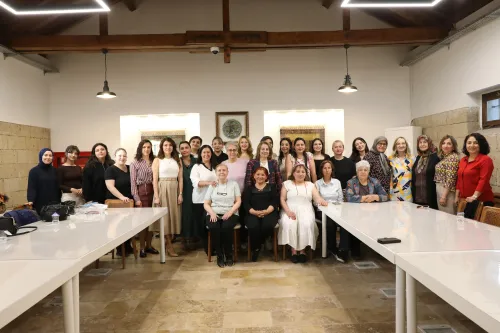
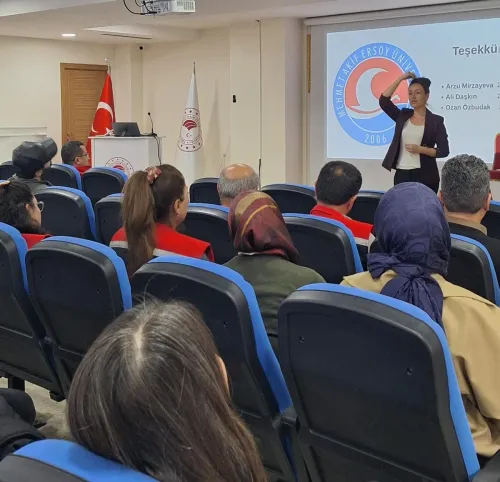
The project is led by Burdur Mehmet Akif Ersoy University (MAKÜ), Faculty of Veterinary Medicine, Department of Animal Science faculty member Prof. Dr. Özkan Elmaz, supported by the European Union's Research and Innovation Framework Program ‘Horizon 2020’, PRIMA (Partnership for Research and Innovation in the Mediterranean Area) program, and previously supported by TÜBİTAK International Cooperation Department (UİDB) under the project titled 122N057 ‘Agro-ecological sheep/goat breeding system based on the evaluation of halophytes of saline areas of Mediterranean coastal regions -HaloSheep’. The ‘3rd Info day -3. Bilgilendirme Toplantısı’ was held on February 13, 2025, with both face-to-face and online participation of project partners from Turkey, Tunisia, Spain, France, Italy, and Greece at Burdur Mehmet Akif Ersoy University, Lavanta Tepesi Hotel.
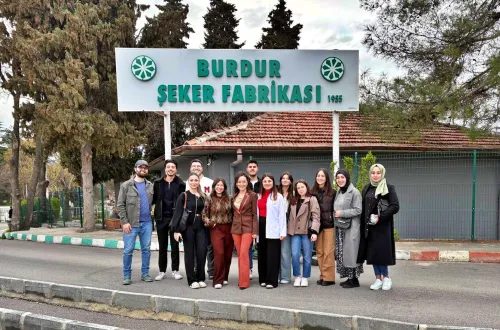
At the Halosheep 3rd Information Meeting, online participation of project partners from Tunisia, Spain, France, Italy, and Greece, along with some members of the COST (European Cooperation in Science and Technology) supported project ‘CA22144 - Sustainable use of salt-affected lands (SUSTAIN)’, and the MAKÜ project team, Burdur Sheep and Goat Breeders Association Board members, Veterinarian Kazım Üstüner, breeders, shepherds, academics, and students attended.
Project leader Prof. Dr. Özkan Elmaz stated in his speech at the meeting; “The project is being conducted with 6 international partners. Studies are being carried out on sheep-goat herds in the Burdur lake and Yarışlı lake basins in Turkey, Kerkennah islands in Tunisia, and Greece. Many parameters such as the evaluation of plants growing in saline soils (Halophytes) as feed, meat yield/quality obtained from these animals, milk yield, risk of disease, and effects on animal welfare are being examined.”
At the meeting, Prof. Dr. İskender Gülle from the project team shared some results such as the impact of climate change on drought and water resources in our region, the feed and biomass values of Halophytes growing in the Burdur - Yarışlı lake basins, the fertility analysis of soil samples, and the nutritional value of plants.
Prof. Dr. Nuri Mamak provided information about the metabolic profile results in sheep-goat Halophyte production systems. Assoc. Prof. Dr. Aykut Asım Akbaş mentioned the results obtained regarding the carcass characteristics and meat quality of lambs and kids raised in Halophyte and non-Halophyte systems. He stated that lambs prefer Halophytes more than kids and show relatively higher digestibility values. It was observed that kids prefer local feed sources like non-Halophytic kermes oak more than lambs.
Within the scope of the project, project leader Prof. Dr. Özkan Elmaz stated that many different parameters are being examined, such as the calculation of the carbon footprint in sheep-goats for meat and milk production per unit kg by Italian researchers. “Within the scope of the project, we will present the results obtained in a report to both the PRIMA institution and TÜBİTAK. According to the initial results obtained from the project, it has been observed that salt-tolerant plants (Halophytes) resistant to drought are evaluated as feed sources by sheep-goat species at certain periods under changing climate conditions, and these plants do not have a negative impact on animal health and animal yield (meat/milk).” As the project leader, he thanked TÜBİTAK, Burdur Province Breeding Sheep-Goat Breeders Association President Vet. Hekim Mustafa Yıldız and his team, and the shepherds who contributed to the project for their support in carrying out this project with an international dimension.